

Subspecialty Migraine & Headache Care
Work directly with Dr. Peterlin.
A Dartmouth fellowship–trained headache specialist
Former Director of Headache Research at Johns Hopkins
New patients typically seen within 3 weeks. Extended 75–90 minute first visits.
What to Expect as a New Patient
1. Before Your Visit
You complete a detailed intake so your history is already understood
Questionnaires are reviewed in advance to better assess your symptoms
Prior records, imaging, and labs are reviewed ahead of time
This allows your visit to start where it should: with you, not paperwork.
Your first visit is designed to use time differently – focused on understanding your headaches and building a clear plan, not gathering basic information.
2. During Your Visit
Your history is summarized and clarified together
A focused neurological examination is performed
Most of the visit is spent building your individualized treatment plan. This includes:
What may be contributing to your headaches
What additional workup (if any) is needed
A clear approach to treatment, including both medication and non-medication options
3. After Your Visit
You leave with a clear, written plan and next steps
You receive education and tools to track your progress
Follow-up is scheduled to assess response and refine your plan
Care is adjusted over time, with visits becoming less frequent as your plan stabilizes.
Ready to take the next step?
Request a new patient visit to begin a more thoughtful, structured approach to your headaches.
Who We Help
Migraine and chronic migraine
Frequent or recurring headaches
New or changing headache symptoms
Headaches that have not responded as expected to prior treatment
Headaches significantly interfering with work, family, or daily life
Patients seeking a second opinion or a more detailed evaluation
We care for patients with a wide range of headache disorders, from new symptoms to longstanding concerns.
Whether your symptoms are recent or long-standing, the goal is to better understand your headaches and develop a clear plan forward. Many of our patients come to us after years of searching for real answers. That's exactly what we're here for.
What Makes Care Here Different
You will always see Dr. Peterlin at every visit, allowing care to remain consistent, thoughtful, and individualized over time
New patient visits are 75–90 minutes, providing time to fully understand your headache history, prior treatments, and goals
Follow-up visits are focused and purposeful, centered on progress, response to treatment, and thoughtful adjustment when needed
Treatment plans are comprehensive and individualized, including acute treatment, rescue strategies, prevention, and behavioral or lifestyle approaches tailored to your specific headache pattern and daily life
About Dr. Peterlin
Headache medicine is not a specialty Dr. Peterlin fell into. It is one she chose – and has spent her career deepening.
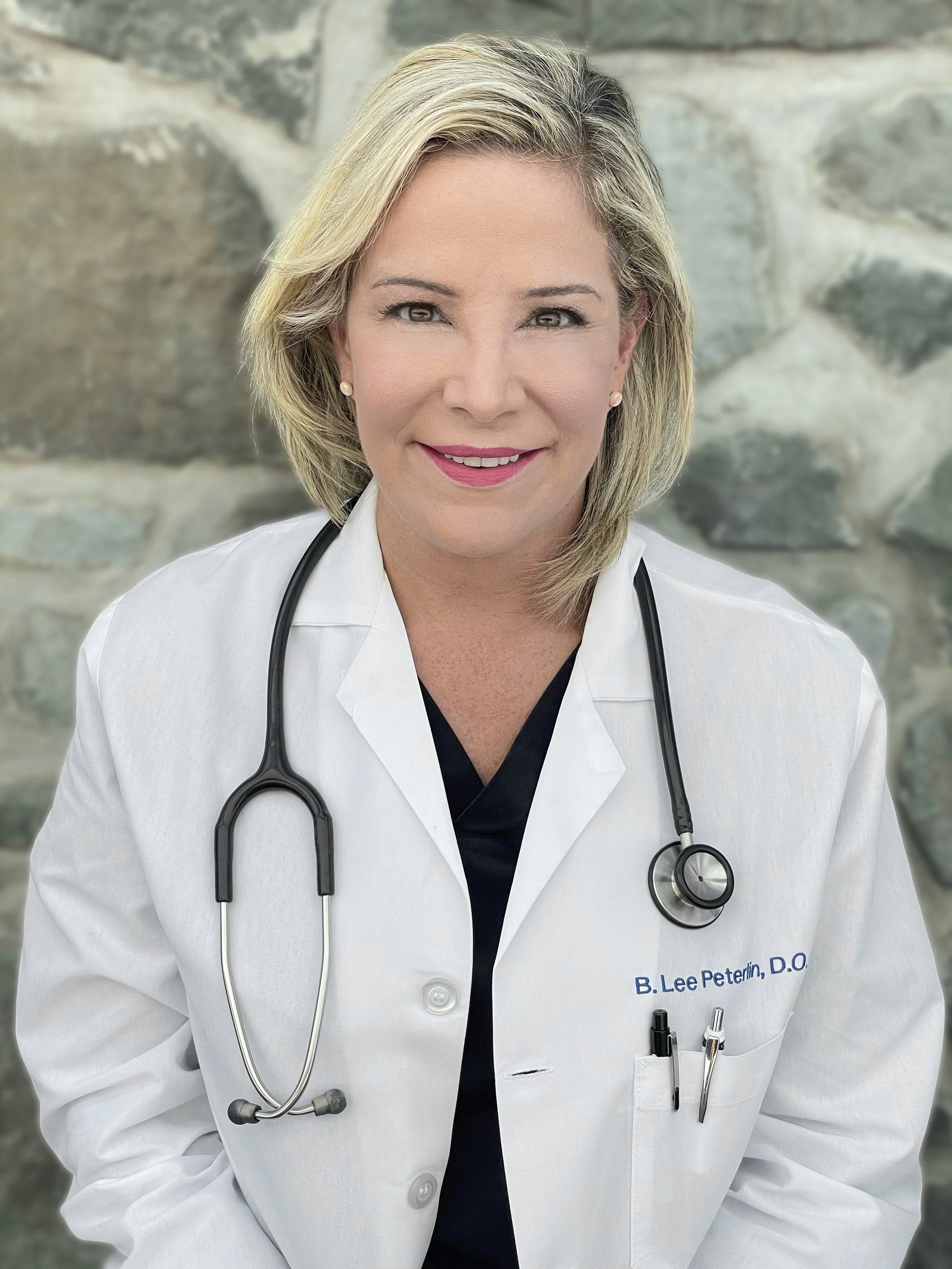
B. Lee Peterlin, DO, FAHS
She has practiced long enough to witness two transformations in migraine medicine. The first transformation was the arrival of triptans, the first acute treatments developed specifically based on migraine's known pathophysiology; and the second was the arrival of the CGRP-targeting drugs, doing the same thing all over again. That perspective, of a clinician and researcher present for both, shapes how she approaches every patient she sees. She founded Pennsylvania Headache Center because she believed patients with complex and treatment-resistant headache disorders deserved something that did not yet exist in this region: a practice built entirely around them, with the time, the expertise, and the singular focus to actually help.
Founder & Medical Director, PA Headache Center
Dr. Peterlin is a Dartmouth-trained headache specialist and former Director of Headache Research at Johns Hopkins School of Medicine, where she led NIH-funded, pharmaceutical, and foundation-supported research in headache medicine. She has authored more than 100 peer-reviewed scientific publications, with a focus on advancing our understanding of migraine comorbidities and the identification of novel migraine biomarkers. [View her selected publications by topic].
After Years of Searching
Real patients. Real outcomes. Real relief.
"My migraines were absolutely debilitating before I met Dr. Peterlin, who put me on a treatment plan that has worked miracles in my life. As a full-time nurse and mother, you can imagine this has been a real game changer for me and my family."
— Leigha D.
"After seeing a number of medical specialists over the years who didn't really offer solutions, I really appreciate how special Dr. Peterlin is. I used to have headaches more days than not — now I have months with no headaches at all."
— Barbara Z.
"I've struggled with severe migraines for 20 years, trying every medication available and ending up in the emergency room regularly. After finding Dr. Peterlin and Pennsylvania Headache Center, my migraines are finally under control. I can finally live my life again."
— Dan P.
”I have had migraines since I was in second grade and tried many medications over the years with no relief. With some trial and error, Dr. Peterlin and I found practices and medications that actually worked."
— Robin E.
See what more patients are saying about Pennsylvania Headache Center
Conditions We Treat
We treat the full spectrum of headache disorders, with particular expertise in complex & treatment-resistant cases.
Migraine
A neurologic brain disorder affecting nearly 40 million Americans. Globally, migraine is the second leading cause of disability across all diseases, only behind low back pain. We treat all types of migraine, including episodic, chronic, with aura, menstrually-related, vestibular, abdominal, and migraine that has not responded to standard treatments.
Cluster Headache
A severe, short-lasting headache associated with autonomic symptoms such as tearing or eyelid drooping. One of the most frequently misdiagnosed headache disorders, often for years before reaching a specialist.
Cervicogenic Headache
Referred head pain originating from the upper cervical spine or its soft tissues, often radiating from the back of the head forward. Frequently confused with migraine in both directions, sometimes missed, sometimes overdiagnosed, and requiring careful clinical evaluation to identify accurately.
Post-Traumatic Headache (Headache Attributed to Trauma/Injury to the Head and/or Neck)
Headache that develops within 7 days of a head injury, concussion, or whiplash and persists beyond 3 months. Often resembles migraine in its features and may share underlying mechanisms. Patients with persistent post-traumatic headache have historically been underdiagnosed and undertreated. This is precisely the kind of case where subspecialty evaluation matters.
New Daily Persistent Headache
A distinct headache disorder in which pain begins suddenly and becomes continuous and unremitting, often dated by patients to a specific day. Frequently treatment-resistant and one of the most underrecognized headache disorders in primary care.
Neuralgias
Unilateral brief stabbing pain in the distribution of a specific cranial nerve, often trigger-provoked. Includes trigeminal neuralgia, occipital neuralgia, glossopharyngeal neuralgia, and others. Frequently misdiagnosed; and accurate diagnosis directly changes treatment.
Other Complex Headache Disorders
The International Classification of Headache Disorders (ICHD-3) recognizes more than 200 distinct headache and facial pain diagnoses. If you have been told your headaches are unusual, difficult to classify, or have not responded to treatment elsewhere – that is precisely the kind of patient this practice is built for.
A Different Model of Care
Pennsylvania Headache Center operates as a direct-pay practice. No insurance billing. No compromises on your care.
We made this choice deliberately. When insurance companies are removed from the equation, treatment decisions are made by you and your doctor – not a claims department.
What this means for you:
Longer, unhurried visits with your physician
Faster access to subspecialty care
Treatment decisions based on what is right for you – not what is reimbursable
Superbills are provided at every visit. You can submit directly to your insurance company for potential out-of-network reimbursement at neurologist rates.
Your insurance can still be used for:
Prescribed medications
Laboratory work
Imaging
What does it cost? We are happy to discuss fees when you call. Many patients find the cost of a visit comparable to a specialist out-of-pocket expense — without the wait, the referral hurdles, or the time limits.
Our Locations
Subspecialty headache care in two locations across Pennsylvania.
Exton, PA – Chester County PHC Exton is located at 124 John Robert Thomas Drive, Suite 102, Exton, PA 19341. Serving patients from West Chester, Malvern, Paoli, Downingtown, Wayne, Berwyn, Devon, Phoenixville, Coatesville, Kennett Square, King of Prussia, and surrounding Chester County and Main Line communities.
Camp Hill, PA – Central Pennsylvania PHC Camp Hill is located at 205 Grandview Avenue, Suite 206, Camp Hill, PA 17011. Serving patients from Harrisburg, Mechanicsburg, Hershey, Carlisle, York, Lebanon, Lancaster, and surrounding Central Pennsylvania communities.
Phone: 717-745-6223
Fax: 717-745-6224